
Environment

We carefully manage our environmental impact and work with our customers, suppliers and business partners to respond to the changing climate.

This means looking at our operations and how we can reduce waste – water, electricity and other consumption. It also means investing in areas such as research, catastrophe modelling and new technologies that benefit our brokers and customers.

As a business with a long-term outlook, it’s important that we play our part in the debate on how to mitigate the impact of climate change on the global economy.

We recognise that the most effective way to engage with policymakers, customers and suppliers on climate issues is by acting at an industry level. That’s why we’re working together with others in our sector to play our part.

Climatewise logo

We achieve more together

We’re a founding member of ClimateWise, which aims to leverage insurer’s collective expertise to better understand, communicate and act on the risks associated with climate change and work closely with Lloyd’s and the Association of British Insurers (ABI).

More information on ClimateWise is available at www.climatewise.org.uk.

We are also members of the Sustainable Markets Initiative, a private sector organisation for sustainable transition founded by His Majesty King Charles III. The Sustainable Markets Initiative facilitates action between world leaders and CEOs to position sustainability at the heart of global value creation. More information is available at Home | Sustainable Markets Initiative.

In addition we work closely with the Better Insurance Network, Insurance Development Forum and the Lloyds Market Association.

What are the odds? It’s what gets us out of bed in the morning.

Many of the risks we underwrite are impacted by climate variability so it’s vital we understand as much as possible about climate risk. We actively invest in research, catastrophe modelling and new technologies that improve our underwriting capabilities so we can provide products our customers can rely on.

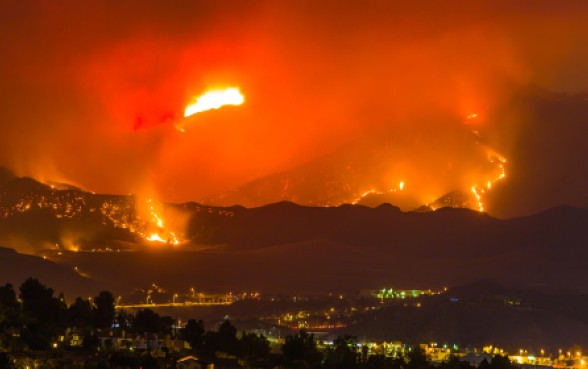
For example, following the devastating California wildfires of 2018, we invested in new research and modelling to further increase our understanding of the risk. By licensing a new risk model for wildfire, and applying our 'Hiscox view of risk' we are now able to set premiums more accurately.

The flood threat

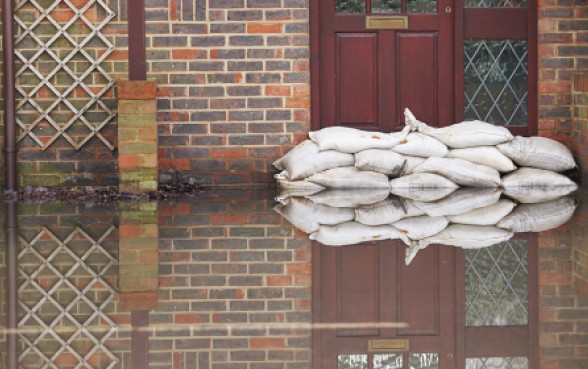
In flood, through our participation in the UK’s Flood Re scheme, and our award-winning US FloodPlus product, we’re protecting more homeowners at risk of flooding who otherwise would have had no cover or not enough cover.

Damage caused by escape of water is the biggest driver of home insurance claims globally. We were the first UK insurer to offer a free Leakbot, the smart water leak alarm, to all new and existing buildings insurance customers, helping to prevent escape of water damage before it occurs.

In the USA, we provide homeowners and business owners with comprehensive flood protection through our big-ticket London Market offering, FloodPlus. This award-winning product delivers higher limits to ensure full indemnity in the event of a loss and broader coverage than the National Flood Insurance Program (NFIP), the US government-backed scheme. FloodPlus also incentivises proactive risk management by offering premium discounts to those who take steps to reduce their flood exposure. Our pricing approach reflects the true risk of each individual property, supported by advanced modelling capabilities that combine in-house expertise with external data sources to deliver a sophisticated view of flood risk, including pluvial, fluvial and coastal surge. This enables accurate, location-specific pricing and reinforces our position as a leader in private flood insurance.

Industry partnerships that put customer needs first

Having great relationships with our brokers is important to us, and we look to build strong and lasting partnerships with those that share our values.

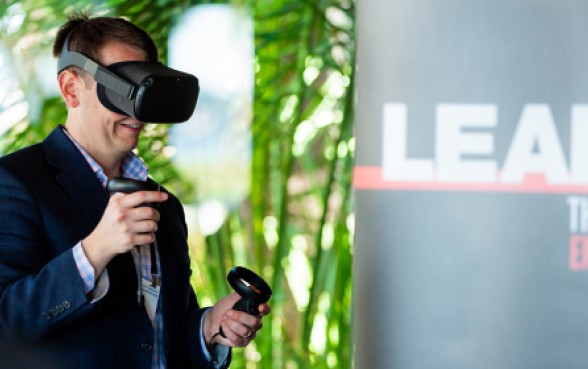
Our ‘superb service’ ethos means we take the time to develop a greater understanding of individual customer and brokers’ needs. Hiscox UK and Hiscox London Market have Chartered Insurer status from the Chartered Insurance Institute (CII), which recognises the professionalism and expertise of staff and helps to attract business partners looking to work with high-quality insurers. Across the Group we run annual broker summit events for our broker partners and the rising stars in our businesses.

Hiscox has partnered with Humanity Insured, an independent international not-for-profit dedicated to empowering communities to build climate resilience through effective insurance solutions. Backed by the insurance sector and incubated by Howden, a global insurance intermediary group, Humanity Insured is on a mission to leverage private and philanthropic capital at scale, unlocking £2 billion of insurance protection for 3.6 billion people living on the climate crisis frontline. By paying a portion of insurance premiums that establish quick access to funds, Humanity Insured ensures that vulnerable communities are equipped to manage the impacts of climate change they face. Beyond insurance protection, the not-for-profit funds access to assets, training and climate modelling, supporting informed decision-making around climate adaptation and equipping communities to adapt and mitigate the threat that climate presents to their livelihoods.

Supporting the transition

ESG 3033 – which launched in March 2023 – is nested within Hiscox Syndicate 33, leaning on existing stamp capacity and complementing Hiscox London Market’s existing portfolio. It is our first specialised Lloyd’s sub-syndicate and provides additional insurance capacity and support to clients with positive ESG credentials, such as renewable power generators and energy storage providers. ESG credentials are assessed using a combination of proprietary and independent third-party data, with cover available for a range of insurance lines and industries operating anywhere in the world where Lloyd’s licences are valid.

We have developed our first Transition Plan, setting out how we plan to support the transition to a low-carbon economy while continuing to serve our customers and communities.

This plan explains:

  • how climate considerations are being embedded into our strategy, underwriting and investments
  • how we're managing climate-related risks and opportunities
  • our approach to reducing our own emissions and supporting wider system change
  • how governance, accountability and progress tracking underpin delivery

Publishing our first Transition Plan is an important milestone. It reflects the work of teams across the business and our commitment to transparency, credibility and long-term resilience in a changing climate.

Hiscox Green Team logo

Reducing our environmental impact

We care about the environment and have established a network of employee-led country Green Teams which share a common purpose but whose activities are tailored for each country. Together these teams can collaborate, share ideas and information to improve how we work, then implement new office practices that are not only efficient but environmentally responsible.

Managing our carbon footprint through ambitious net-zero targets

Central to our efforts to manage our environmental impact is an ambitious set of targets for the reduction of GHG emissions. We announced our  Group-wide GHG targets with our 2021 full-year results, and since then we have focused on embedding them. These targets, which were developed using SBTi methodologies and designed to align with a 1.5°C net-zero world by 2050, are:

  • reduce our Scope 1 and 2 emissions by 50% by 2030, against a 2020 adjusted baseline*;
  • reduce our operational Scope 3† emissions by 25% per full-time equivalent (FTE) by 2030, against a 2020-adjusted baseline*;
  • transition our investment portfolios to net-zero GHG emissions by 2050. The aim is that more than 25% of our corporate bond portfolio by invested value will have net-zero or Paris-aligned targets by 2025, and more than 50% by 2030;
  • engage with our suppliers, brokers and reinsurers on our net-zero targets and on their plans to adopt Paris-aligned climate targets;
  • monitor emerging standards around underwritten emissions and collaborate across our industry on their development, aligning with best practice in this area as it emerges.

In 2024 we added the following engagement targets with regards to our supply chain; 

  • By the end of 2025, Hiscox aims to increase this percentage of total third-party spend with suppliers who hold an Ecovadis assessment score from 30% to 45%.
  • With the future target of reaching 75% in the next three years, as this threshold will enable us to significantly improve the accounting methodology of calculating Hiscox’s emissions.

* Baseline year adjusted in light of Covid-19-related lockdown measures, to reflect a more normal year in terms of business travel etc.
† Operational Scope 3 emissions predominantly consist of purchased goods and services and capital goods, and business travel (air, rail and car travel).

We continue to focus on reducing the emissions we have control over, and to work closely with our partners where that control is shared. Where common standards and methodologies do not yet exist – for example, in measuring and assessing supply chain impacts, and underwritten emissions – we want to help shape the solution.

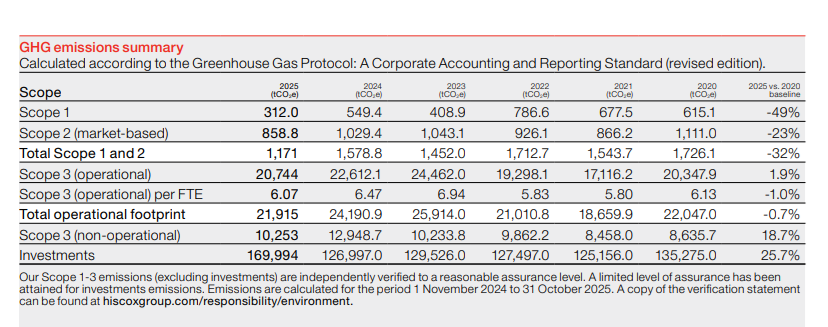
We continue to focus on managing and minimising our carbon footprint as a Group. In 2025, our overall scope 1 and 2 emissions decreased by 26% compared to 2024 or a 23% overall reduction from the 2020 baseline. 

Contributing factors include:

  • the removal of Direct Asia offices from the footprint, following the sale of the business;
  • reduction in emissions in our UK offices, particularly London where we have taken action to reduce consumption,
    • including fewer adjustments in the external blinds to ensure the office temperature is controlled;
    • art light installations switched off at evenings and weekends;
    • and coffee stations, screens and other devices switched off in line with office use;

We are pleased with this progress towards our GHG targets. However, we anticipate this progress will fluctuate as we pursue our growth ambitions. More information can be located in our initial transition plan at hiscoxgroup.com/transitionplan.

Our global GHG summary is listed below, you can find more detailed results including our Streamlined Energy and Carbon Reporting (SECR) table within our annual report and accounts.

GHG emissions summary

Statement of verification 

Assurance opinion.

Based on the results of our verification process, Carbon Footprint Ltd provides reasonable assurance that the GHG emissions statement (excluding investments which were assured to limited level):

  • is materially correct and is a fair representation of the GHG emissions data and information; and
  • is prepared in accordance with the GHG Protocol Corporate Standard. It is our opinion that Hiscox has established appropriate systems for the collection, aggregation and analysis of quantitative data for determination of GHG emissions for the stated period and boundaries.

Beyond targeted action, we also offset the emissions we could not reduce through an accredited carbon offsetting scheme. Our global emissions are currently offset through a collaboration with a solar project in India. We continuously review and asses our governance process around carbon offsetting, as we look to remain operationally carbon neutral as we have been since 2014.


* Our Scope 1-3 emissions (excluding investments) are independently verified to a reasonable assurance level. A limited level of assurance has been attained for Investments emissions. Emissions are calculated for the period 1 November 2024 to 31 October 2025. A copy of the verification statement can be found at hiscoxgroup.com/responsibility/environment. 

*GHG emissions are calculated according to the Greenhouse Gas Protocol: A Corporate Accounting and Reporting Standard (revised edition). Hiscox uses market-based Scope 2 emissions for reporting in line with its GHG reduction target. Scope 1 includes natural gas, fugitive emissions (leakage of gases from air conditioning and refrigeration systems) and company cars, while Scope 2 includes electricity and district heating. Operational Scope 3 includes operational suppliers (office and other related services), capital purchases, fuel and energy-related activities, waste generated in operations, business travel, employee commuting and remote working. Non-operational Scope 3 includes emissions that do not directly contribute to the emissions associated with daily business activity, including non-operational purchased goods and services, transportation and distribution and downstream leased assets. 

An assessment across all categories of Scope 3 emissions has taken place and the relevant categories are disclosed as part of our full GHG inventory (above). Note some emissions totals may not tally due to rounding. A copy of our Streamlined Energy and Carbon Reporting (SECR) GHG emissions table can be found on the website. 

The investment emissions are calculated using the Enterprise Value Including Cash (EVIC-based) method of attributing financed emissions to investors, and calculations use Morgan Stanley Captial International’s (MSCI) carbon data† as the ultimate source. Our 2020 operational emissions baseline for business travel has been restated to project pre-Covid travel patterns.

 † Although Hiscox’s information providers, including without limitation, MSCI ESG Research LLC and its affiliates (the ‘ESG Parties’), obtain information (the ‘information’) from sources they consider reliable, none of the ESG Parties warrants or guarantees the originality, accuracy and/or completeness, of any data herein and expressly disclaim all express or implied warranties, including those of merchantability and fitness for a particular purpose. The information may only be used for your internal use, may not be reproduced or redisseminated in any form and may not be used as a basis for, or a component of, any financial instruments or products or indices. Further, none of the information can in and of itself be used to determine which securities to buy or sell or when to buy or sell them. None of the ESG Parties shall have any liability for any errors or omissions in connection with any data herein, or any liability for any direct, indirect, special, punitive, consequential or any other damages (including lost profits) even if notified of the possibility of such damages. 

We continue to focus on reducing the emissions we have control over, and to work closely with our partners where that control is shared.

In addressing our Scope 1 and 2 targets, we are already engaging with our facilities managers across the Group to continue to transition our offices to renewable electricity contracts. Where we have total control over our utility providers, this is easier to do, but where that control is shared, or where it belongs to our landlords, we will petition for change. We are also reassessing our existing use of company cars, which is currently limited to a small fleet in some of our European operations. We are already making progress here, having retired our fleet of company cars in Germany during 2021, and in those areas where it is not possible to eliminate the fleet entirely, we intend to transition to electric vehicles over time.

On operational Scope 3, which is dominated by business travel, we are currently focused on improving the consistency of travel data across the Group to enhance our understanding of both volume and class of travel, to ensure our action plan is appropriately targeted.

Beyond targeted action, we also offset the emissions we could not reduce through an accredited carbon offsetting scheme. Our global emissions are currently offset through a collaboration with a solar project in India. We continuously review and asses our governance process around carbon offsetting, as we look to remain operationally carbon neutral as we have been since 2014.

About scheme

Our global emissions are currently offset through a combination of four projects each of which is either VCS-accredited or GS-accredited. Three of these projects generate clean electricity through renewable wind or solar energy and are located in Tamil Nadu, Madhya Pradesh and Andhra Pradesh, India. These projects replace significant volumes of anthropogenic GHG emissions per year from the Indian grid which has been historically dominated by thermal/fossil fuel based power. Further, we elected to support a safe water project based in Zambia, which rehabilitates and maintains vital borehole handpumps which offer communities a reliable means of accessing clean groundwater aquifers, building their capacity to manage and maintain these water sources into the future.

Sustainability reporting and policies

Our latest reports, policies and disclosures on environmental, sustainability and social governance issues.

Our Report and Accounts outline our approach to risk management, including our views on social governance and environmental sustainability.

Our annual climate report tracks our progress against climate change issues.

Our environmental policy sets out the standards we aim to achieve throughout Hiscox Group activities.

(Re)insurers have a role in ensuring an orderly transition to a low carbon economy and we want to play our part. Hiscox has a Group-wide exclusions policy, effective from 1 January 2022.

Read our latest CDP disclosure.

Read more about what we're doing...